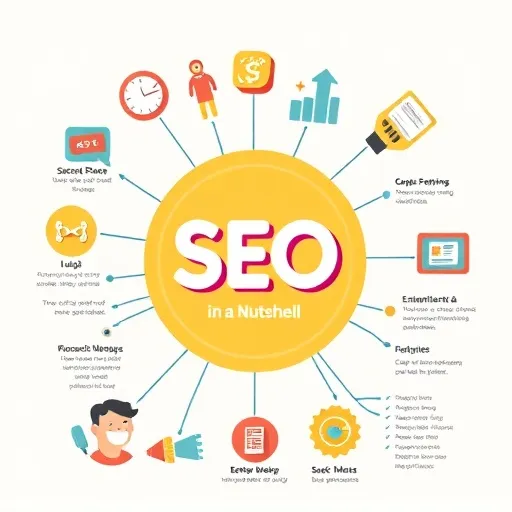
SEO is about matchin
SEO in a Nutshell
At its heart, what is seo and how it works boils down to one simple idea: matching. You've got something people are searching for — maybe it's information, a product, a service, or just a solid answer to a question. Meanwhile, people are typing queries into search engines like Google, Bing, and whatever AI-powered search tools have popped up lately. SEO (search engine optimization) is the whole toolkit of strategies and techniques that helps a search engine figure out that your content is the perfect match for those queries — which means it deserves a top spot in the search results.
Here's what most folks totally miss: you're not really optimizing for the search engine. You're optimizing for the actual person behind the search bar, and the search engine is just the bridge between you two. The best SEO practitioners out there are basically really good at reading human intent and structuring content so that machines can recognize that intent match. That dual focus — human value plus machine readability — is seriously the heart of what is seo and how it works.
Crawling, Indexing, and Ranking: The Three-Stage Process of Search Engines and Web Bots
Before you can optimize for anything, you gotta understand the three-stage process every search engine runs through: crawling, indexing, and ranking. This is foundational to what is seo and how it works.
Crawling is all about discovery. Search engines use automated programs — often called spiders or bots — that travel across the web by following links. When one of these bots lands on a page, it reads the content and follows the links on that page to discover new pages. If your site is brand new and nothing links to it, the bot might not find it for a while. That's why getting your site linked from other reputable places on the web matters — it's like putting up a sign on a highway that says "hey, there's something worth seeing down this road." You can also help crawlers out by submitting a sitemap through a webmaster tool. Think of a sitemap as a table of contents you hand directly to the search engine.
Indexing is where the search engine stores and understands your stuff. Once a bot crawls a page, the search engine analyzes it and stores the information in a massive database called an index. This isn't just a copy of the text — it's an understanding of what the page is about, what topics it covers, how it's structured, and how it relates to other pages. If a page can't be indexed (because of technical issues, blocking instructions, or poor structure), it will never appear in search results. Period. This step is crucial for what is seo and how it works.
Ranking is the final decision-maker. When someone enters a query, the search engine pulls relevant pages from its index and ranks them. The ranking process uses hundreds of signals — some known, some closely guarded secrets. These signals fall into broad categories: relevance (does the content actually answer the query?), quality (is the content trustworthy, well-researched, and original?), authority (do other reputable sites link to and reference this content?), user experience (is the page fast, mobile-friendly, and easy to navigate?), and freshness (for time-sensitive queries, is the content recent and up to date?).
In 2026, search engines also lean heavily on AI models that understand context, nuance, and conversational intent. A query like "best way to store coffee beans" isn't just matched to pages containing those exact words — the system understands the underlying need and surfaces content that genuinely addresses it, even if the phrasing differs. That's a huge part of what is seo and how it works today.
Technical SEO, On-Page Optimization, and Content Quality: The Major Pillars of Search Rankings
SEO isn't one thing. It's a collection of disciplines that work together. Let's break down the pillars that matter most in 2026.
Technical SEO is the foundation. If your site has technical problems, nothing else you do will reach its full potential. This covers site speed and performance (pages need to load fast — users and bots both lose patience), mobile responsiveness (most searches now happen on mobile devices), clean site architecture and logical URL structure, secure connections (HTTPS), proper use of structured data to help search engines understand your content, and fixing broken links, duplicate content issues, and crawl errors. Think of technical SEO as making sure the doors of your store are unlocked and the lights are on. Without it, customers can't even get in.
On-Page SEO is about optimizing individual pages so they clearly communicate what they're about. Key elements include title tags (the clickable headline that appears in search results — it should accurately describe the page and include relevant terms naturally), meta descriptions (the short summary below the title in results — not a direct ranking factor, but it influences click-through rates), heading structure (using H1, H2, H3 tags logically to organize content and signal hierarchy), keyword usage (naturally incorporating relevant terms — not stuffing them in awkwardly, since modern search engines understand synonyms and related concepts), internal linking (connecting your pages to each other helps both users and crawlers navigate your site), and image optimization (descriptive file names and alt text help search engines understand visual content).
Content quality is still king — but the bar for what counts as "good" content has risen dramatically. Search engines now evaluate content through a framework often referred to as E-E-A-T: Experience, Expertise, Authoritativeness, and Trustworthiness. In simple terms, does the content demonstrate real-world experience? Is it written by someone who knows what they're talking about? Is the site itself credible? Are claims backed up? In 2026, with AI content generation tools everywhere, the differentiator is genuine value. Content that's original, insightful, well-organized, and clearly written by (or informed by) someone with real knowledge consistently outperforms generic, surface-level material. The search engines have gotten very good at spotting the difference — and understanding this is central to what is seo and how it works.
Off-Page SEO, Link Building, and User Experience Signals: Building Authority and Trust
Off-Page SEO refers to signals from outside your website that indicate its credibility. The most well-known is backlinks — links from other websites pointing to yours. When a respected site in your industry links to your content, it's essentially a vote of confidence. Search engines treat these votes as evidence that your content is valuable. But not all links are equal. A link from a highly relevant, authoritative site is worth far more than dozens of links from low-quality directories. In 2026, link building is about earning mentions through great content, digital PR, and genuine relationship-building in your industry. Buying links or participating in link schemes is a fast track to trouble. Beyond links, off-page signals include brand mentions (even without links), social shares, and overall online reputation. Search engines are increasingly sophisticated at connecting the dots between your brand and the broader web conversation. This external side is a big piece of what is seo and how it works.
User experience signals matter too. How people interact with your site after clicking through matters a lot. If visitors land on your page and immediately bounce back to the results (a "pogo-sticking" behavior), that tells the search engine your page didn't satisfy their need. On the other hand, longer dwell times, scrolling, and further clicks within your site signal a positive experience. Core Web Vitals — a set of metrics measuring loading speed, interactivity, and visual stability — remain important in 2026. A beautifully written article on a page that takes eight seconds to load and jumps around while loading will struggle to rank well.
AI Search, Featured Snippets, and Conversational Queries: SEO in the Age of AI Overviews
This is where things get really interesting — and where 2026 SEO diverges from what you'd read in older guides. Search engines now heavily incorporate AI and large language models into their ranking and results. Beyond traditional "ten blue links," many search experiences include AI-generated summaries, conversational answers, and interactive results. This changes the game in a few big ways. Featured snippets and AI overviews matter more — getting your content cited in an AI-generated summary or a featured snippet can drive significant visibility. That means structuring content to directly answer questions — clear, concise, well-organized. Conversational queries are the norm now — people ask full questions in natural language. Content that addresses questions directly and comprehensively performs better than content stuffed with fragmented keywords. Topical authority beats individual pages — rather than optimizing single pages in isolation, building deep, interconnected content clusters around a topic signals to search engines that your site is a go-to resource on that subject. And zero-click results are common — sometimes the answer appears right on the results page and users never click through. Optimizing for visibility in these contexts (through clear structure, direct answers, and structured data) is a growing part of SEO strategy. The underlying principle of what is seo and how it works hasn't changed, though: provide genuine value and make it easy for search engines to understand and trust you.
Organic search remains one of the most significant traffic sources for websites across virtually every industry. Unlike paid advertising, where visibility stops the moment you stop paying, SEO compounds over time. A well-optimized page can continue attracting visitors for years. It's an investment in sustainable visibility. Beyond traffic, SEO builds brand credibility. Consumers tend to trust sites that appear prominently in organic results — there's a perception that a site ranked highly must be legitimate and valuable. And because organic results are earned rather than bought, they carry a weight that ads often can't match. It's also worth noting that SEO feeds into every other channel. The content you create for SEO can be repurposed for email newsletters, social media, and paid campaigns. The insights you gain from keyword research reveal what your audience genuinely cares about — which informs product development, customer service, and overall business strategy. All of this ties back to what is seo and how it works in practice.
Let's clear up a few myths that still float around about what is seo and how it works. "SEO is dead" — every year someone says it, and every year it's wrong. What's dead is old SEO — keyword stuffing, link farms, cheap tricks. The practice itself has evolved and remains essential. "It's a one-time thing" — nope, SEO is ongoing. Search algorithms update, competitors publish, user behavior shifts. A site optimized two years ago and left untouched will gradually lose ground. "It's all about keywords" — keywords are still relevant, but the focus has shifted to intent and topic. Understanding what a user wants to accomplish with a search is far more valuable than simply matching strings of text. "You can guarantee a #1 ranking" — no ethical practitioner can guarantee a specific position. Search results are determined by algorithms that no one outside the search engine controls. Anyone promising guaranteed rankings is a red flag.
If you're new to SEO and wondering where to begin, here's a realistic roadmap: audit your technical foundation (make sure your site loads fast, works on mobile, and is easy for search engines to crawl); understand your audience (research what questions they're asking, what problems they're trying to solve, and what language they use to describe those needs); create genuinely useful content (answer those questions thoroughly, clearly, and with real expertise — organize it with proper headings and structure); build internal links (connect related content so both users and search engines can discover more of your site); earn external mentions (produce content worth referencing and put it in front of the right audiences through outreach and relationship-building); and measure and refine (use analytics to see what's working, what's not, and where opportunities lie). None of this happens overnight. SEO is a long game. But it's one of the few long games that continues paying dividends well into the future.
So here's the bottom line on what is seo and how it works: it's fundamentally about trust and relevance. Search engines want to show their users the most helpful answer possible. Your job is to be that answer — and to communicate that clearly through how your site is built, how your content is written, how you're connected to the broader web, and how you deliver experiences to visitors. In 2026, the tools have changed, the algorithms are smarter, and the competition is fierce. But the core principle remains: what is seo and how it works comes down to understanding what people need, delivering it better than anyone else, and making it easy for search engines to recognize that quality. Everything else is execution details. Get the fundamentals right, stay patient, and keep refining — that's how sustainable search visibility is built, one genuinely helpful page at a time.